A healthy diet is essential for strong teeth and healthy gums, but not all foods are good for your smile. Some foods and drinks can increase the risk of cavities, enamel erosion, gum disease, and tooth sensitivity. While enjoying your favorite treats occasionally is perfectly fine, understanding foods that can harm your teeth can help you make better dietary choices and protect your oral health.
In this blog, we’ll explore the common foods and beverages that may damage your teeth, why they affect oral health, and practical tips to reduce their impact.
How Food Affects Your Teeth
Every time you eat or drink, your teeth are exposed to bacteria, sugars, and acids. Harmful bacteria feed on sugar and produce acids that attack tooth enamel. Over time, repeated acid attacks can weaken enamel, leading to cavities and tooth sensitivity.
Acidic foods and beverages can also wear away enamel directly, making your teeth more vulnerable to decay and discoloration.
Choosing a balanced diet and maintaining good oral hygiene can help minimize these risks.
Sugary Candy
Sticky candies such as caramel, toffee, gummies, and lollipops are among the worst foods for your teeth.
These treats:
- Stick to the tooth surface for a long time
- Feed cavity-causing bacteria
- Increase acid production
- Raise the risk of tooth decay
Hard candies can also crack or chip teeth if bitten.
If you enjoy sweets, it’s better to eat them with meals rather than snacking on them throughout the day.
Soft Drinks and Carbonated Beverages
Soft drinks contain high amounts of sugar and acids, making them especially harmful to tooth enamel.
Frequent consumption may lead to:
- Enamel erosion
- Cavities
- Tooth sensitivity
- Tooth discoloration
Even sugar-free soft drinks can contain acids that weaken enamel.
Choosing water instead of soda is one of the best decisions you can make for your oral health.
Sports and Energy Drinks
Many people assume sports drinks are healthy, but they often contain large amounts of sugar and acids.
Frequent consumption can increase the risk of:
- Enamel erosion
- Tooth decay
- Dry mouth after exercise
For most people, water is a better option for hydration during everyday activities.
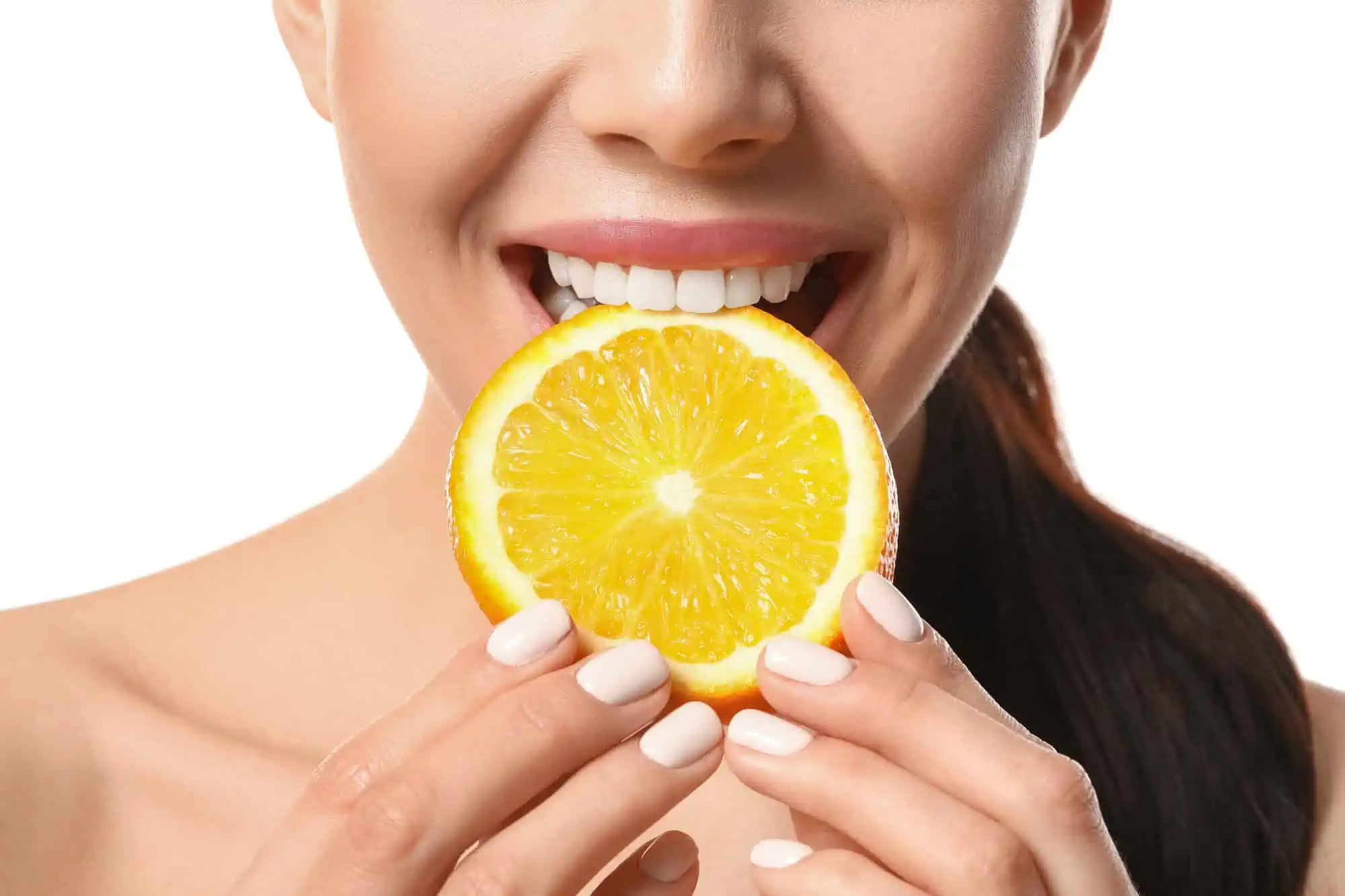
Citrus Fruits and Juices
Oranges, lemons, grapefruits, and other citrus fruits are nutritious but naturally acidic.
Excessive exposure to acidic fruits and juices may:
- Wear away enamel
- Increase tooth sensitivity
- Make teeth more vulnerable to cavities
Enjoy citrus fruits as part of a balanced diet, but rinse your mouth with water afterward and wait about 30 minutes before brushing.
Dried Fruits
Although dried fruits contain vitamins and fiber, they are also sticky and rich in natural sugars.
Common examples include:
- Raisins
- Dates
- Dried apricots
- Figs
These foods can cling to the teeth and feed bacteria, increasing the risk of cavities if good oral hygiene is not maintained.
Potato Chips and Starchy Snacks
Starchy snacks such as potato chips, crackers, and white bread break down into simple sugars inside the mouth.
Small particles often become trapped between teeth, providing food for harmful bacteria.
Brushing and flossing after meals helps remove trapped food and reduce plaque buildup.
Ice
Many people chew ice without realizing it can damage their teeth.
Chewing ice may cause:
- Chipped teeth
- Cracked teeth
- Broken fillings
- Tooth sensitivity
Instead of chewing ice, allow it to melt naturally.
Coffee and Tea
Coffee and tea themselves are not harmful when consumed in moderation, but they can contribute to:
- Tooth staining
- Dry mouth
- Increased acidity if sweetened
- Higher cavity risk when sugar is added
Drinking water after coffee or tea helps reduce staining and rinse away acids.
Alcohol
Alcohol can reduce saliva production, leading to dry mouth.
Since saliva helps protect teeth by washing away bacteria and neutralizing acids, a dry mouth increases the risk of:
- Cavities
- Gum disease
- Bad breath
Drinking water alongside alcoholic beverages helps maintain hydration.
Sticky Desserts
Cookies, cakes, pastries, and sweet baked goods often combine sugar with refined carbohydrates.
These foods:
- Feed cavity-causing bacteria
- Increase plaque formation
- Stick to teeth
- Promote acid production
Limiting sugary desserts and maintaining good oral hygiene reduces their impact.
Healthy Alternatives for Strong Teeth
Instead of frequently choosing foods that can harm your teeth, consider tooth-friendly options such as:
- Cheese
- Plain yogurt
- Leafy green vegetables
- Apples
- Carrots
- Celery
- Almonds
- Fresh fruits
- Water
These foods support healthy teeth by providing important nutrients and encouraging saliva production.
Tips to Protect Your Teeth
Even if you occasionally enjoy sugary or acidic foods, these habits can help protect your smile:
- Brush twice daily using fluoride toothpaste.
- Floss every day.
- Drink water after meals and snacks.
- Limit frequent snacking.
- Choose water instead of sugary beverages.
- Wait about 30 minutes before brushing after acidic foods.
- Visit your dentist regularly for professional cleanings and examinations.
Small daily habits make a significant difference in long-term oral health.
When Should You See a Dentist?
Schedule a dental appointment if you experience:
- Frequent cavities
- Tooth sensitivity
- Persistent bad breath
- Tooth pain
- Bleeding gums
- Visible enamel wear
- Chipped or cracked teeth
Early diagnosis and treatment help prevent more serious dental problems.
Dr. Akram Altawachi is an experienced Orthodontist, providing personalized care for patients seeking guidance on teeth alignment, bite correction, and overall smile aesthetics. He offers comprehensive orthodontic care, including braces, clear aligners, Invisalign, and other treatment options tailored to individual needs. For anyone seeking expert guidance on their orthodontic journey, booking a consultation with Dr. Akram Altawachi provides personalized care, informed treatment guidance, and professional support.